

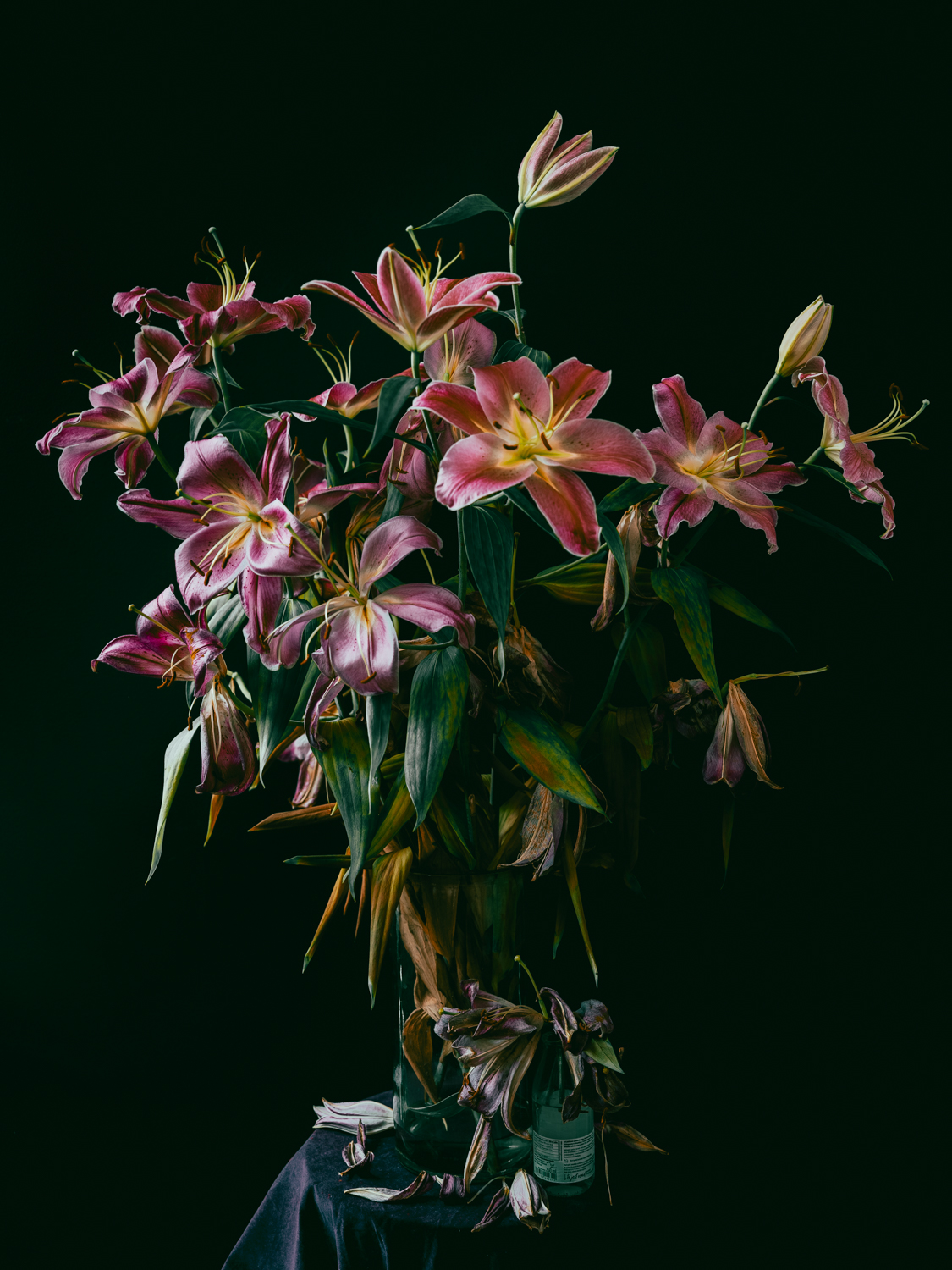
FULL TURGOR
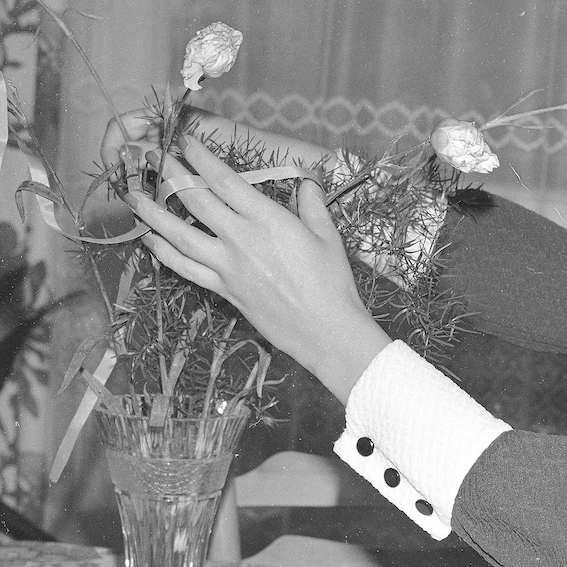
Flowers serve to express emotions and to uphold social conventions, within which even emotions have their prescribed form. Joanna Szpak-Ostachowska examines this relationship. In her work, intense colors and lush forms meet with coolness and detachment. Flowers fill the space, asserting their presence. Their scent, pleasant at first, becomes stifling over time.
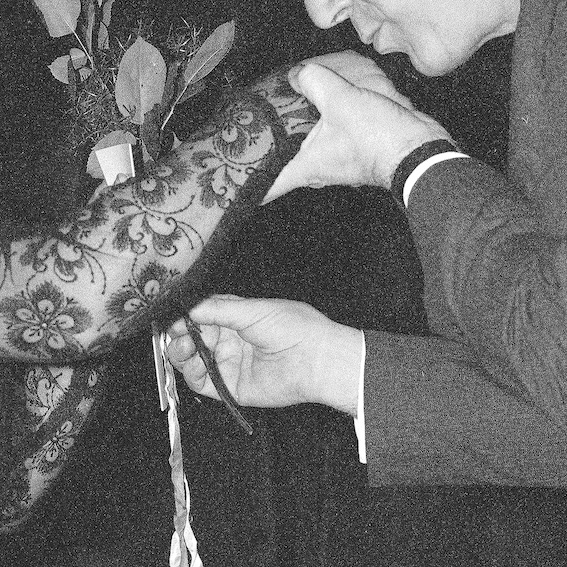
The moment of the greatest intensity of their existence is, at the same time, the beginning of their decline. Plant matter reaches its peak of turgidity – its fullest, firmest state – only to almost immediately lose it. Flowers wilt, petals fall, the fragrance thickens, and freshness is replaced with staleness and decay. The titular full turgor does not, therefore, denote a state which can be held onto, but rather a fleeting moment preceding inevitable change. In this biological process, a contradiction inherent in the ceremonial use of flowers reveals itself: while subordinated to specific gestures and conventions to lend a certain gravity to events, they ultimately elude the very order into which they have been inscribed.
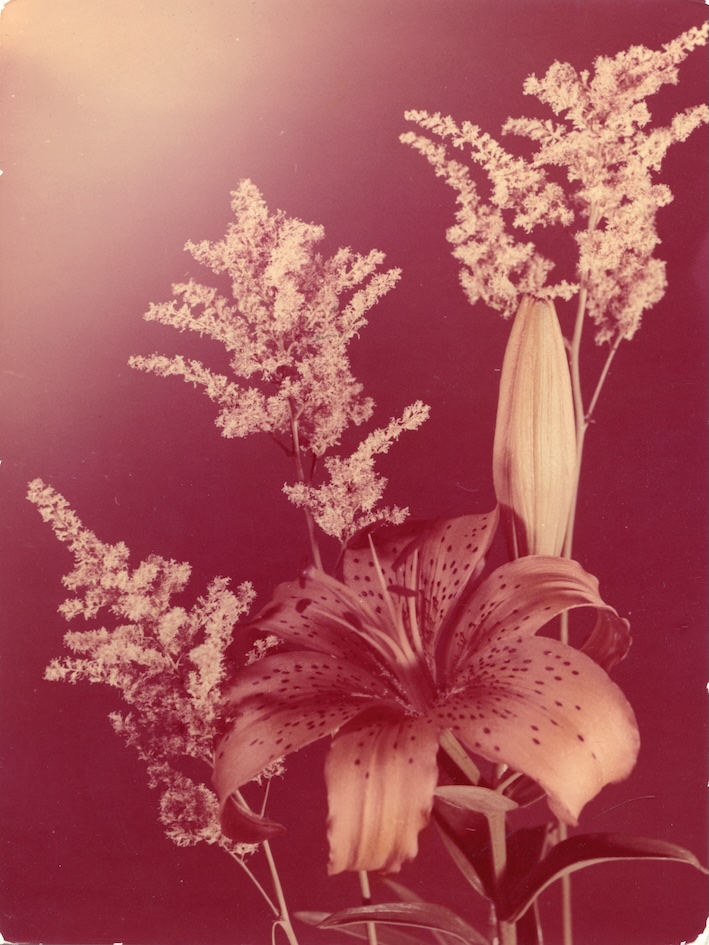
Turgor is the state of tension in a cell wall resulting from the hydrostatic pressure exerted from within the cell. Turgor provides firmness to plant tissues, enabling them to maintain their shape and rigidity—even in parts that lack specialized mechanical tissues[1].
Curator:
Paweł Bąkowski
Texts:
Ilona Witkowska, Paweł Bąkowski
Proofreading:
Monika Wójtowicz
Translations:
Christa Conklin
Media patrons:
Contemporary Lynx, Pismo Artystyczne Format, Kwartalnik Fotografia
Accompanying program:
Olga Krzywiecka, Aleksandra Tews
Photo&video documentation:
Jerzy Wypych
Exhibition production:
Łukasz Bałaciński
Co-financed by the budget of the Lower Silesian Voivodeship Self-Government
Joanna Szpak-Ostachowska is a photographer, artist, and photography educator. She holds degrees in Polish Studies and Cultural Animation from the University of Warsaw. She completed the Sputnik Photos Mentorship Program (2019/2020) and is a member of the all-female collective DJAM. Her practice focuses on themes of time, loss, intimacy, and the material traces of emotions. While working primarily with photography, she also incorporates collage, archival materials, text, and objects. She is the author of the photobooks “Chwasty” (Weeds) and “Sześć wazonów” (Six Vases). Her work has been exhibited at venues including the Ujazdowski Castle Centre for Contemporary Art (Warsaw), the pf Photography Gallery (CK Zamek, Poznań), the Znaki Czasu Centre of Contemporary Art (Toruń), the Ratusz Municipal Gallery (Zamość), the Chłodna 20 art space (Warsaw), the Rybnik Foto Festival, and the Krakow Photomonth (ShowOFF section). Her work is held in private collections as well as in the collection of the Museum of Warsaw.