


AS THE WATER COVERS THE LAND
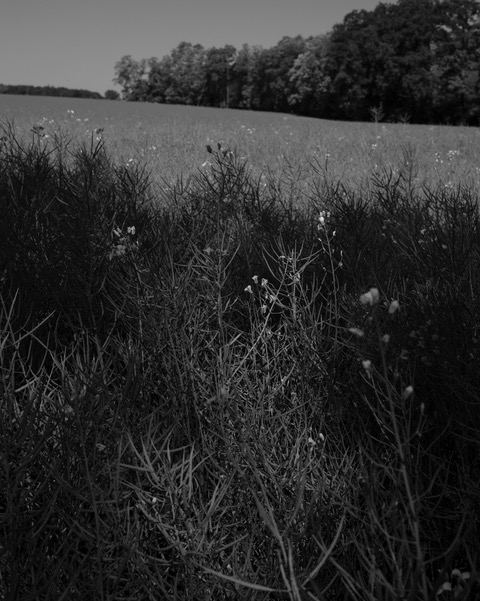
Agriculture exists in a fragile balance between the need for production and the inevitable consequences of its own activity. Intensified cultivation, monocropping, industrial livestock farming, and the relentless exploitation of natural resources have led to severe outcomes, including soil degradation, ecosystem impoverishment, and biodiversity loss. The agricultural landscape is undergoing profound transformation: species of birds, pollinators, and farmland animals are disappearing. Trees and shrubs are being removed, while wetlands and peat bogs are drained and converted into arable land.
The agricultural production system has a significant impact on climate change, yet it remains highly vulnerable to its effects, experiencing droughts, heatwaves, heavy rainfall, and floods. The future of farming depends on understanding natural processes and transforming the way we manage rural landscapes. In the face of rapid climate change, we must turn to proven practices from the past to support and restore the natural environment – such as planting mid-field tree strips and retaining water through natural streams and ditches. These fundamental measures, combined with modern technologies and cultivation methods, can help minimize losses caused by the water and climate crises.
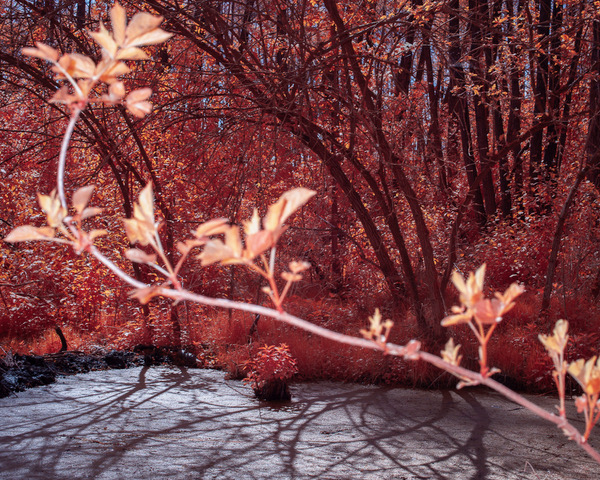
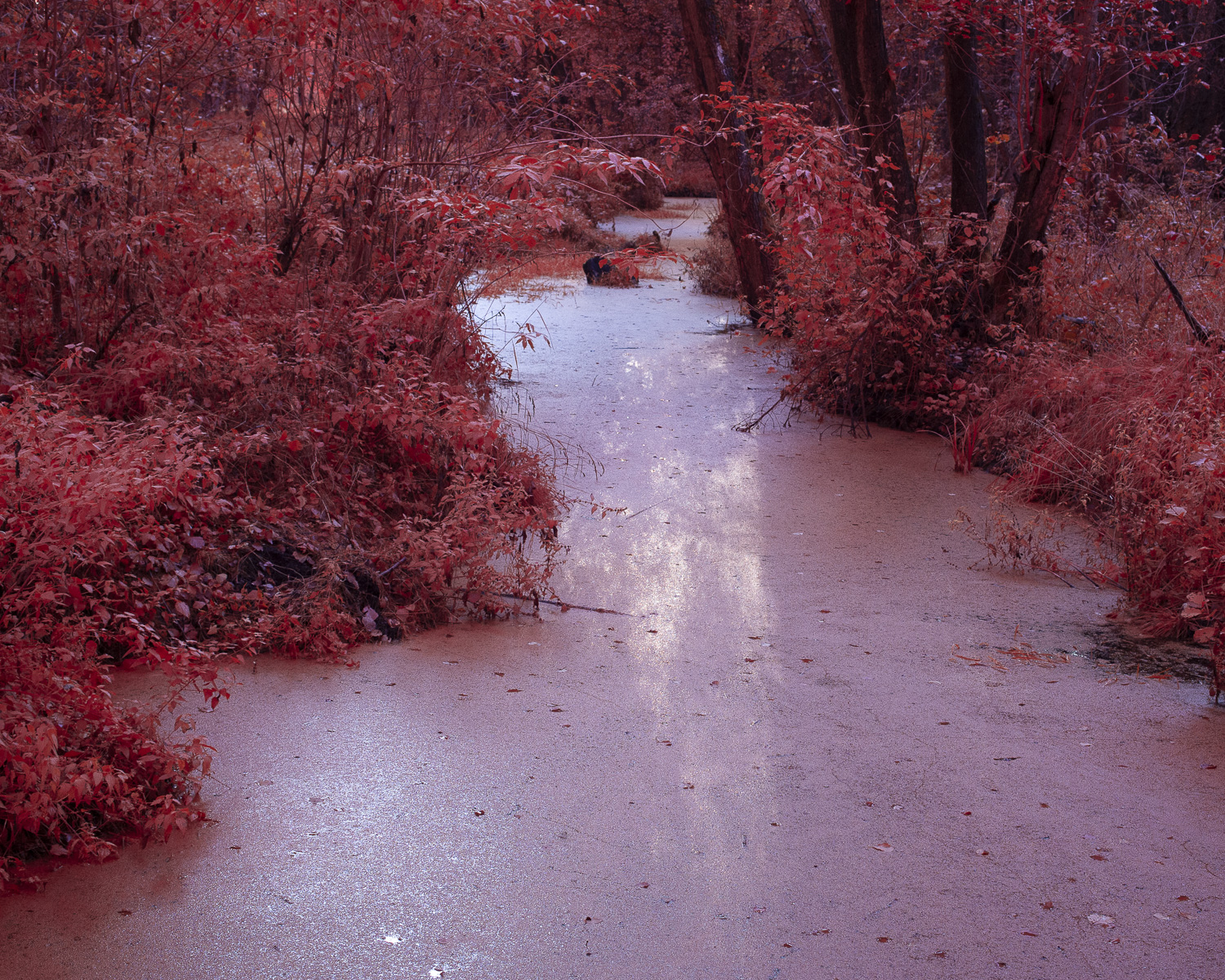
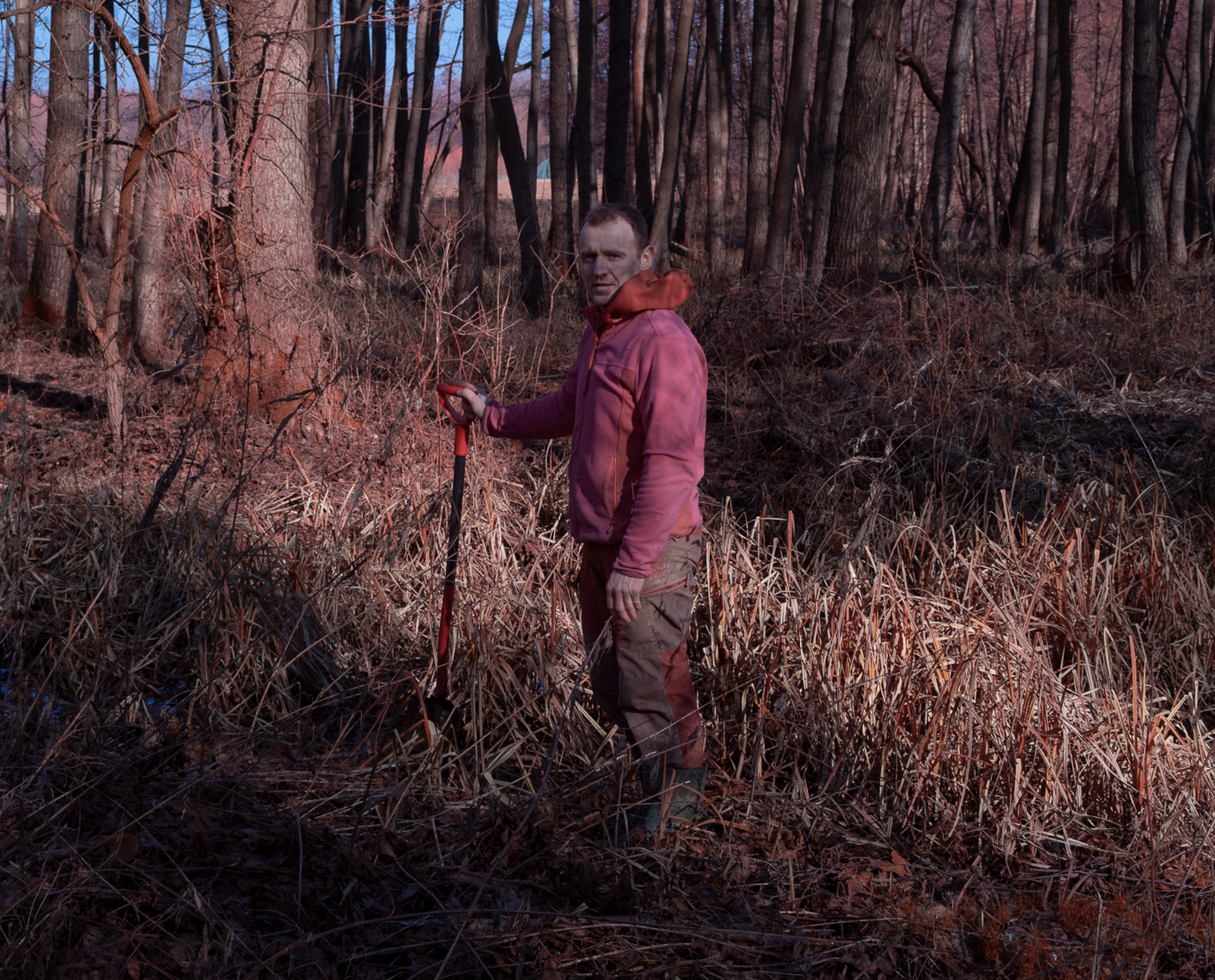
The project “As the water covers the land” unfolds as a dialogue between past and future. Adamski focuses on processes that seek to restore balance within the agricultural landscape. Its contemporary context is shaped by the family farm of Patryk Kokociński, inspired by the legacy of Dezydery Chłapowski, a nineteenth-century pioneer of modern agriculture in Poland. The farm consciously shapes its environment by retaining water through natural streams, using cover crops to improve soil structure, and planting tree shelterbelts across the fields.
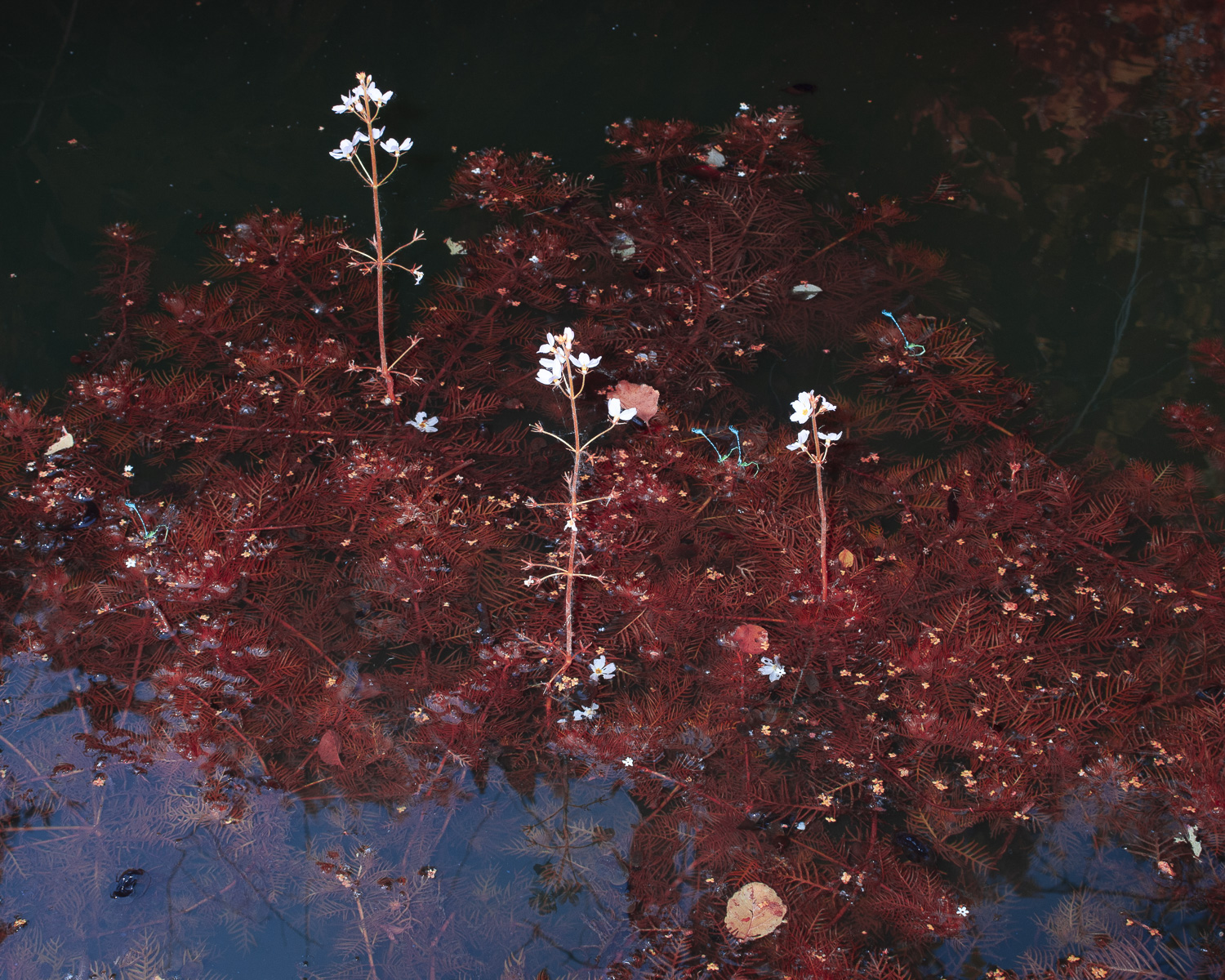
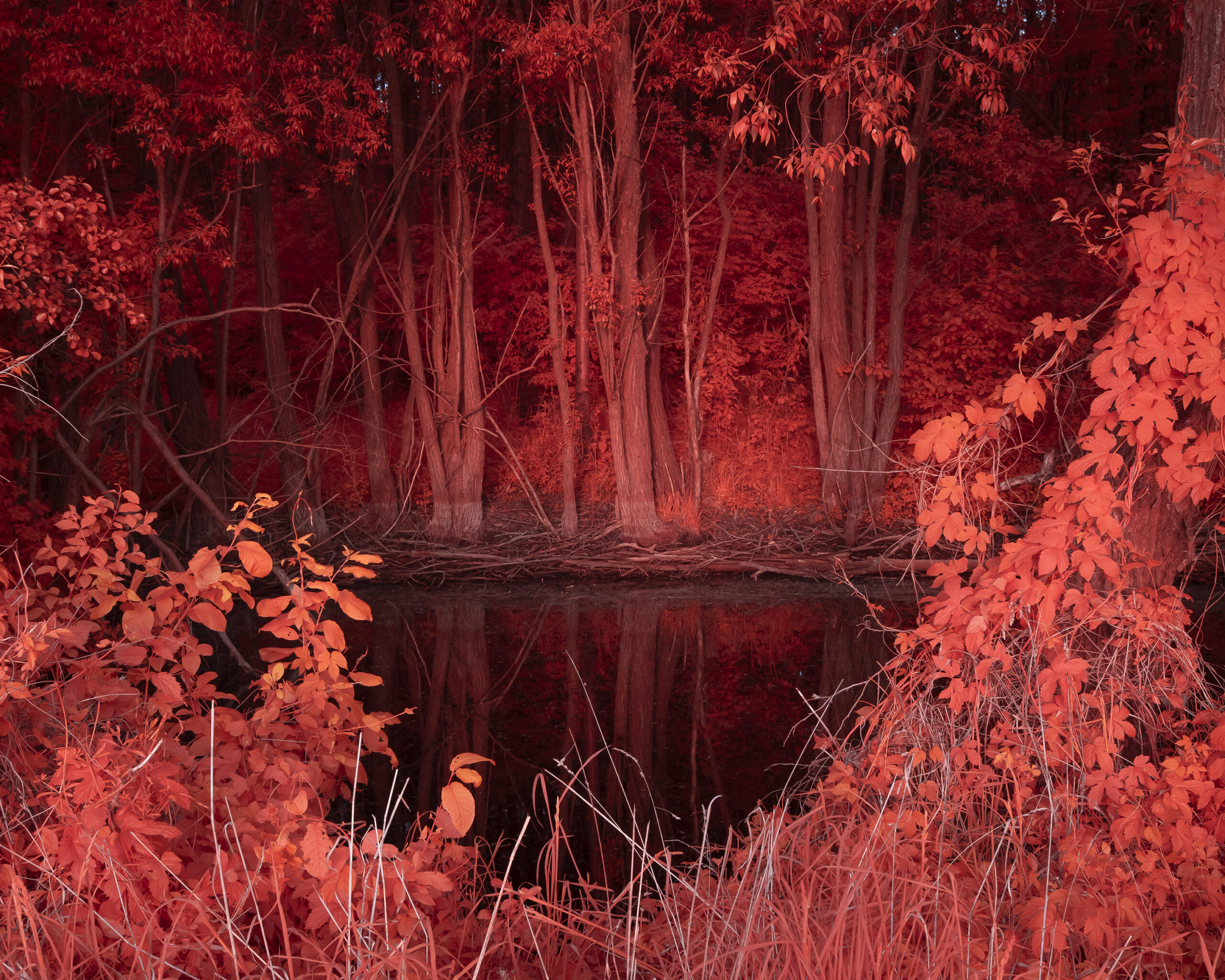
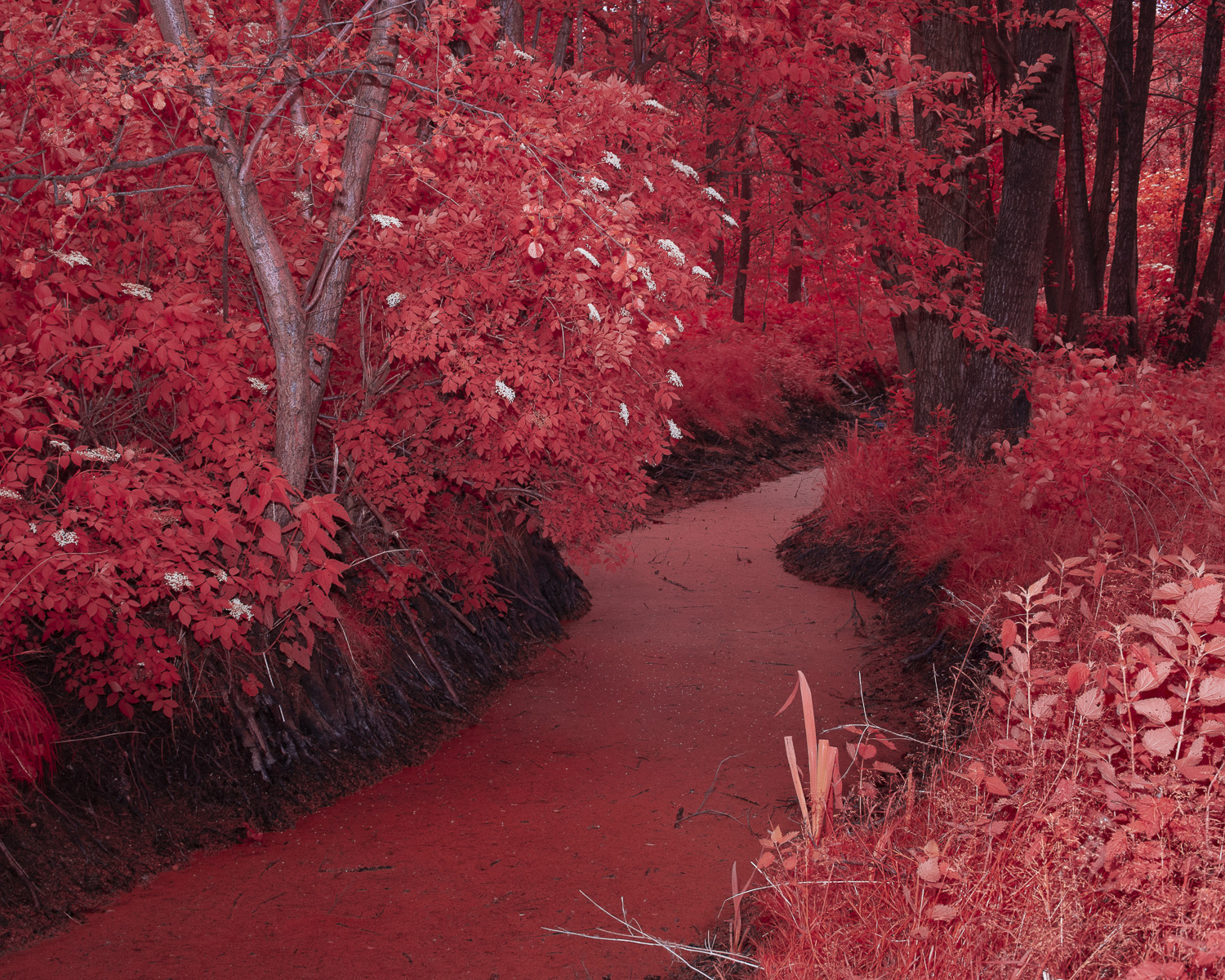
These practices become a metaphor for hope – an attempt to restore the relationship between humans and nature through mindful care for the land. Infrared photography transforms green into red, creating an unreal landscape while simultaneously alerting us to loss and its scale.
“As the water covers the land” explores the interdependence between humans and the environment, as well as the urgent need to rethink agriculture’s relationship with nature in the face of the climate crisis. The project invites reflection on our practices, concepts of progress, the limits of growth, and our shared responsibility for the environment.
Curator assistance:
Paweł Bąkowski
Texts:
Michał Adamski, Maria Krześlak-Kandziora
Proofreading:
Monika Wójtowicz
Translations:
Christa Conklin
Partner:
Pix.house
Media patrons:
fotopolis.pl, Kwartalnik Fotografia, Analog.mag, Pismo Artystyczne Format, Radio Wrocław
Co-financed by the budget of the Lower Silesian Voivodeship Self-Government
Michał Adamski – fotograf dokumentalista. Głównie zajmuje się realizacją długoterminowych projektów dokumentalnych. W swojej fotografii porusza tematy społeczne, w których ważny jest człowiek i jego życie we współczesnym świecie. Nie unika tematów osobistych, czego przykładem jest opublikowana w 2015 roku książka Nie mogę przebrnąć przez chaos.
W 2001 roku ukończył Akademię Rolniczą w Poznaniu i rozpoczął pracę w rodzinnym gospodarstwie rolnym. W wieku 30 lat zainteresował się fotografią i rozpoczął drogę odchodzenia od rolnictwa. Uczestniczył w warsztatach Napo Images i Sputnik Photos oraz studiował fotografię w Instytucie Twórczej Fotografii w Opawie.
Był stypendystą Ministra Kultury i Dziedzictwa Narodowego (2017 r.) oraz Marszałka Województwa Wielkopolskiego (2015 i 2024).
Współtworzy Fundację i Galerię Pix.House. Jest członkiem kolektywu Archiwum Protestów Publicznych. Jest autorem książek fotograficznych “Nie mogę przebrnąć przez chaos” i “Two tailed dog”, “Ciemno w dzień, Ciemno w nocy”.
Jego prace wystawiane były w wielu miejscach w Polsce oraz w Portugalii, Niemczech, Francji, Włoszech, Słowacji, Czechach, Litwie i USA.