
PLANTS, PLANETS, THE SUN, AND BLUE SKIES
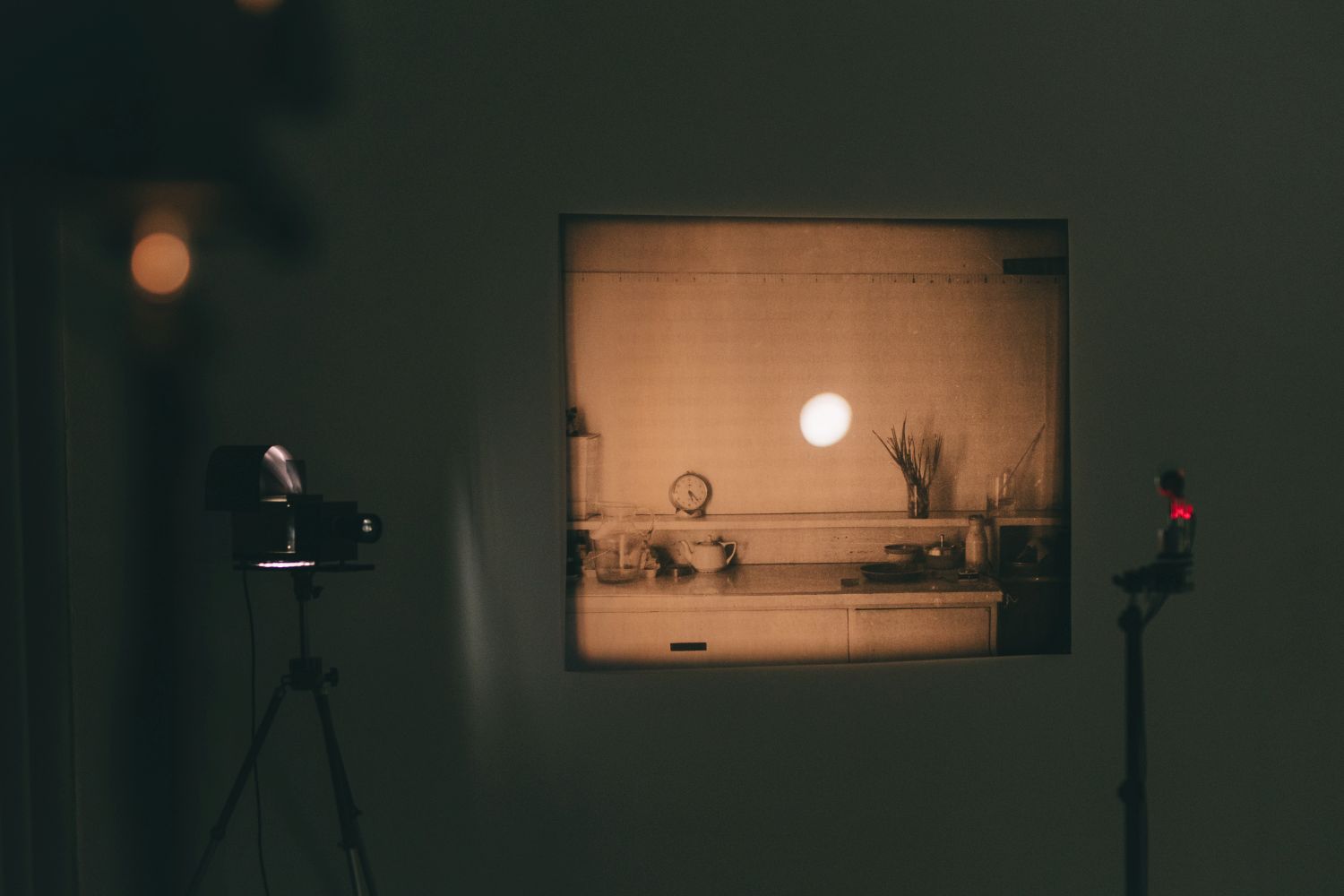
In the work of Zdzisław Jurkiewicz, a meeting occurs between the distant and unattainable and the close, the everyday, the ordinary. The cosmos, an infinite, abstract space transcending the scale of human experience, appeared in his work not as the subject of spectacular visions, but as an element of the everyday landscape, observed from inside his apartment. Jurkiewicz observed the sky from his own kitchen. He was fascinated by constellations, planets, the movement of the Sun, and the blue of the sky – viewed through a telescope of his own making, through a window, from a specific place, at a specific time.
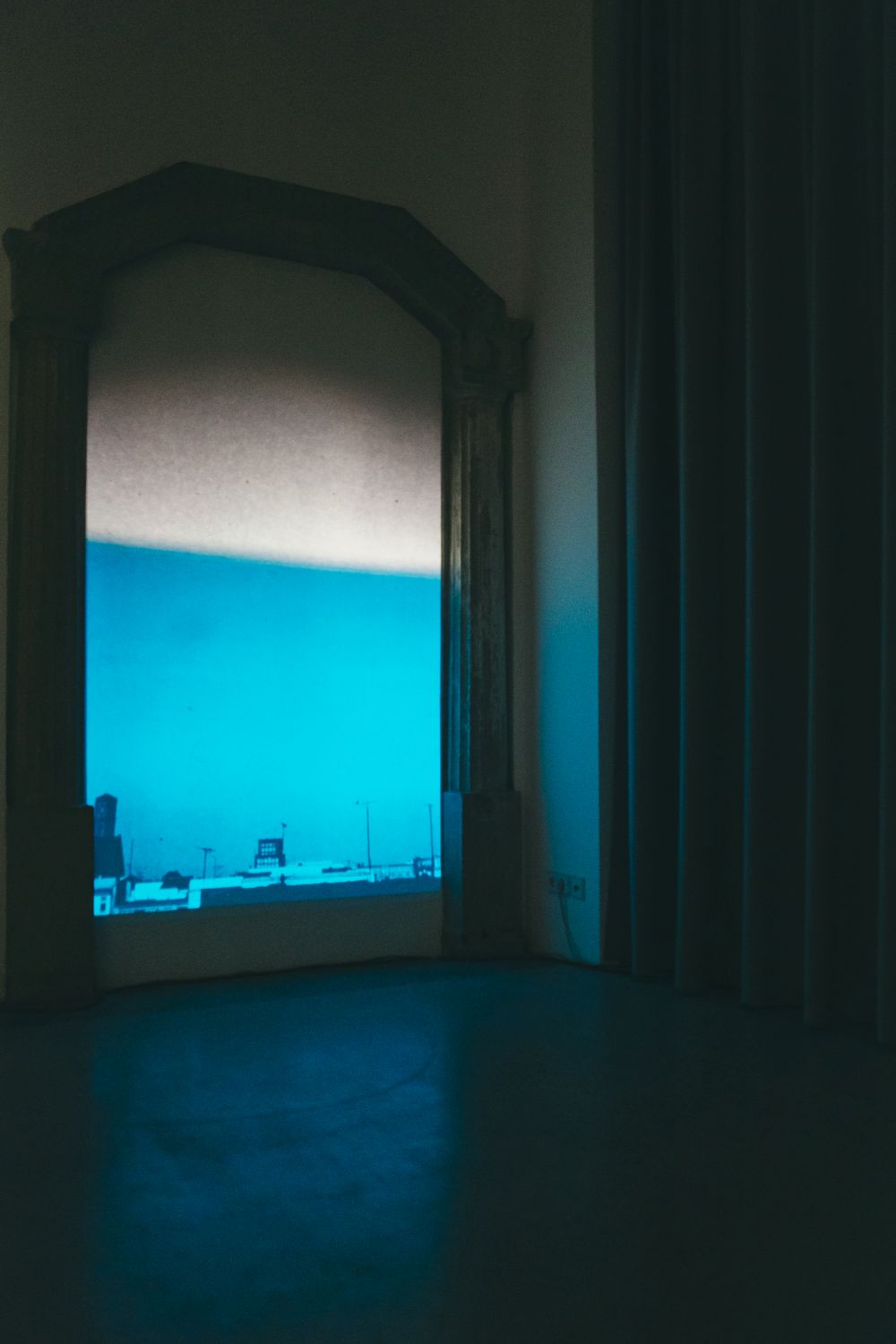
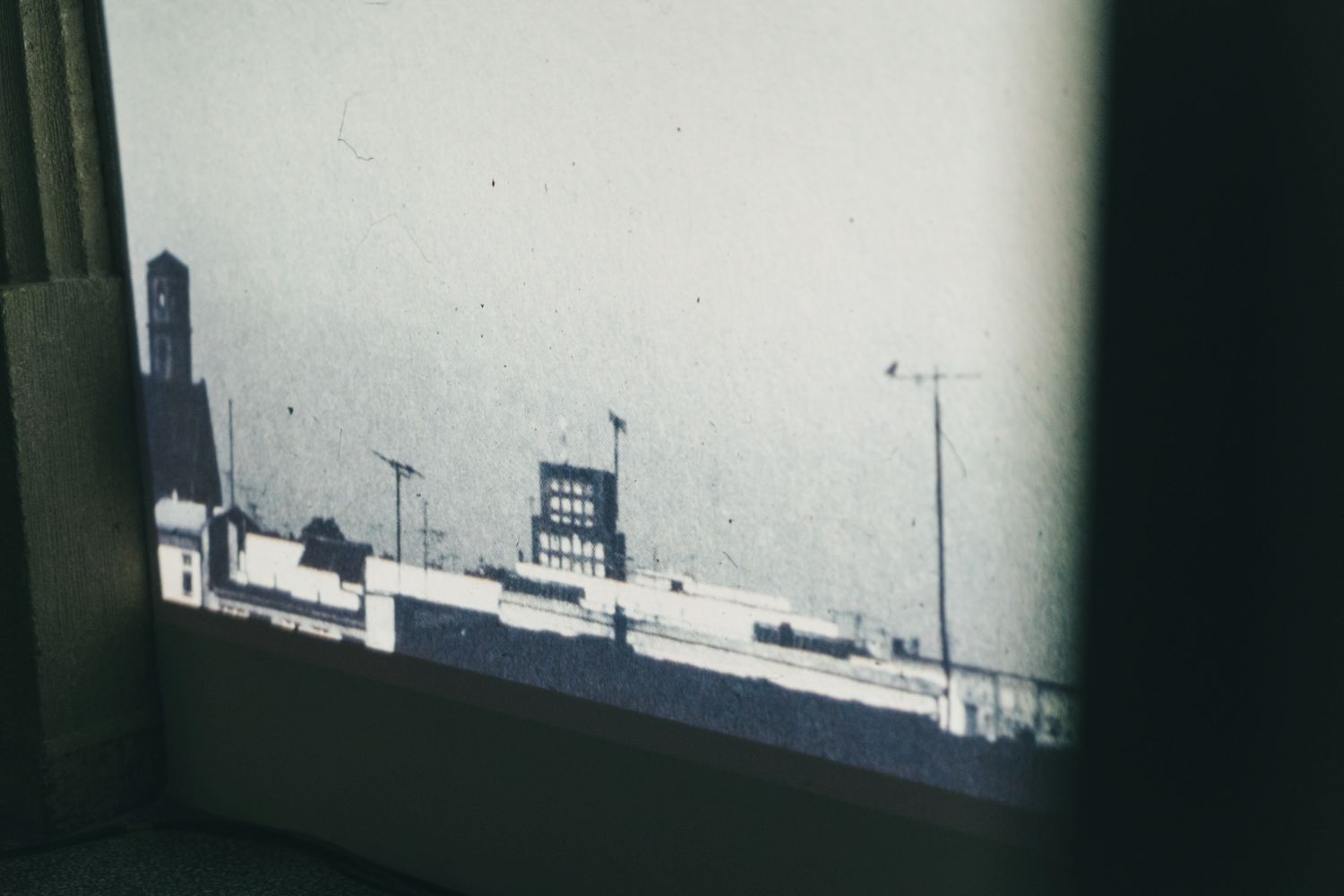
It is the window – the boundary between interior and exterior – that becomes a key figure in the exhibition. Jurkiewicz’s observation of the sky requires the space of the home: its layout, objects, and everyday rhythms. The cosmos does not exist outside this space, but rather is revealed through it, filtered by the interior. In Jurkiewicz’s work, this way of thinking materialized most clearly in his photographs from the 1970s, which
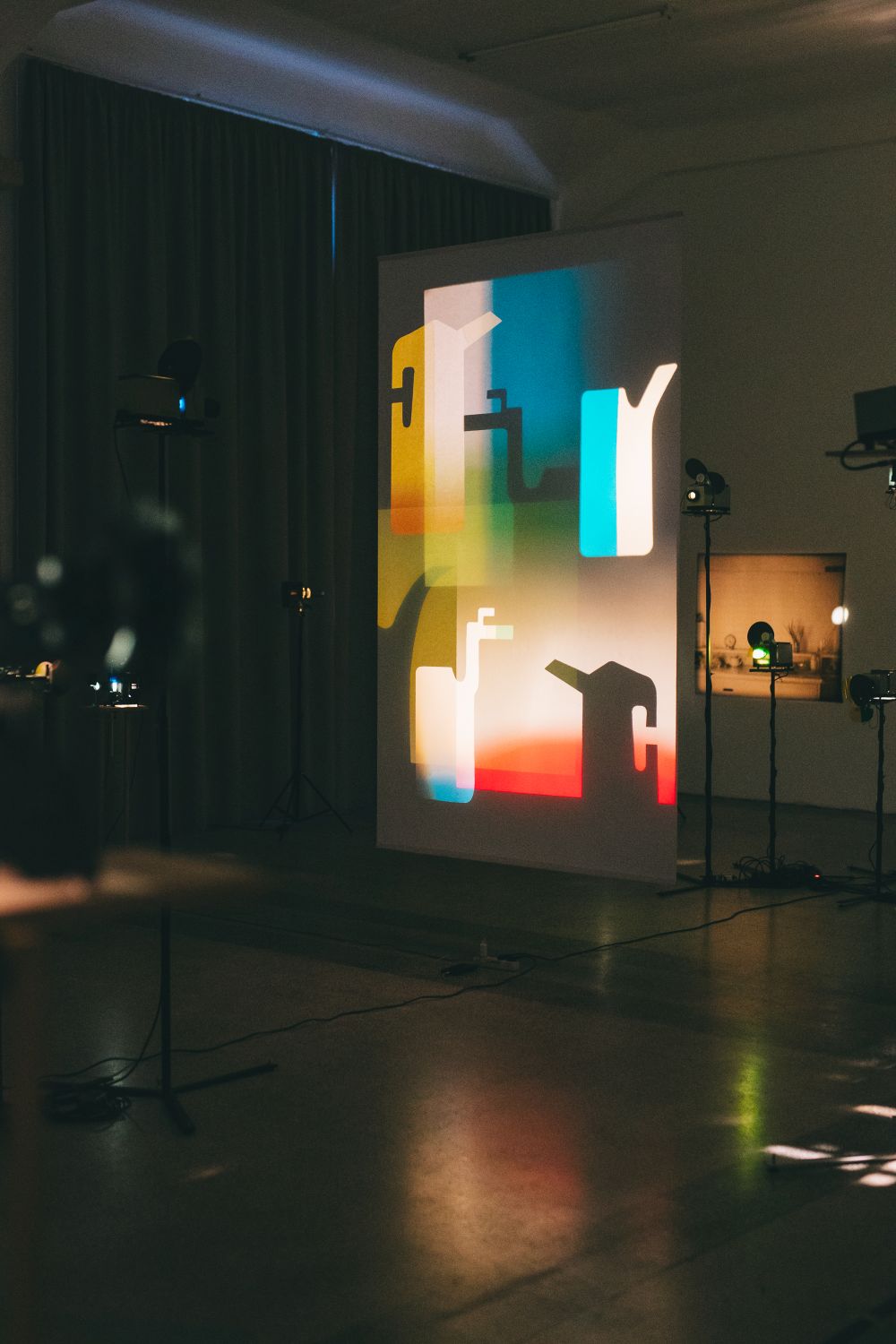
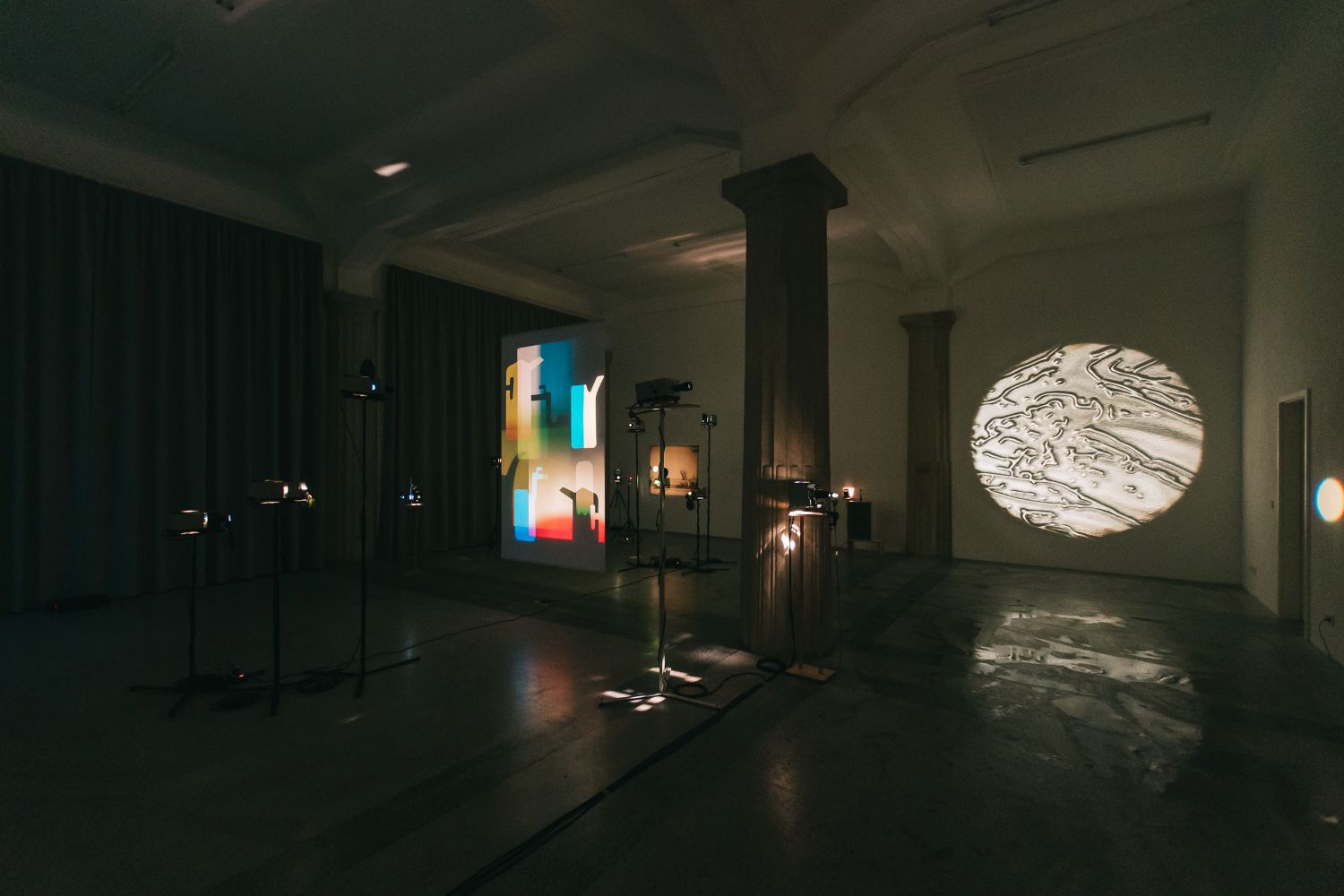
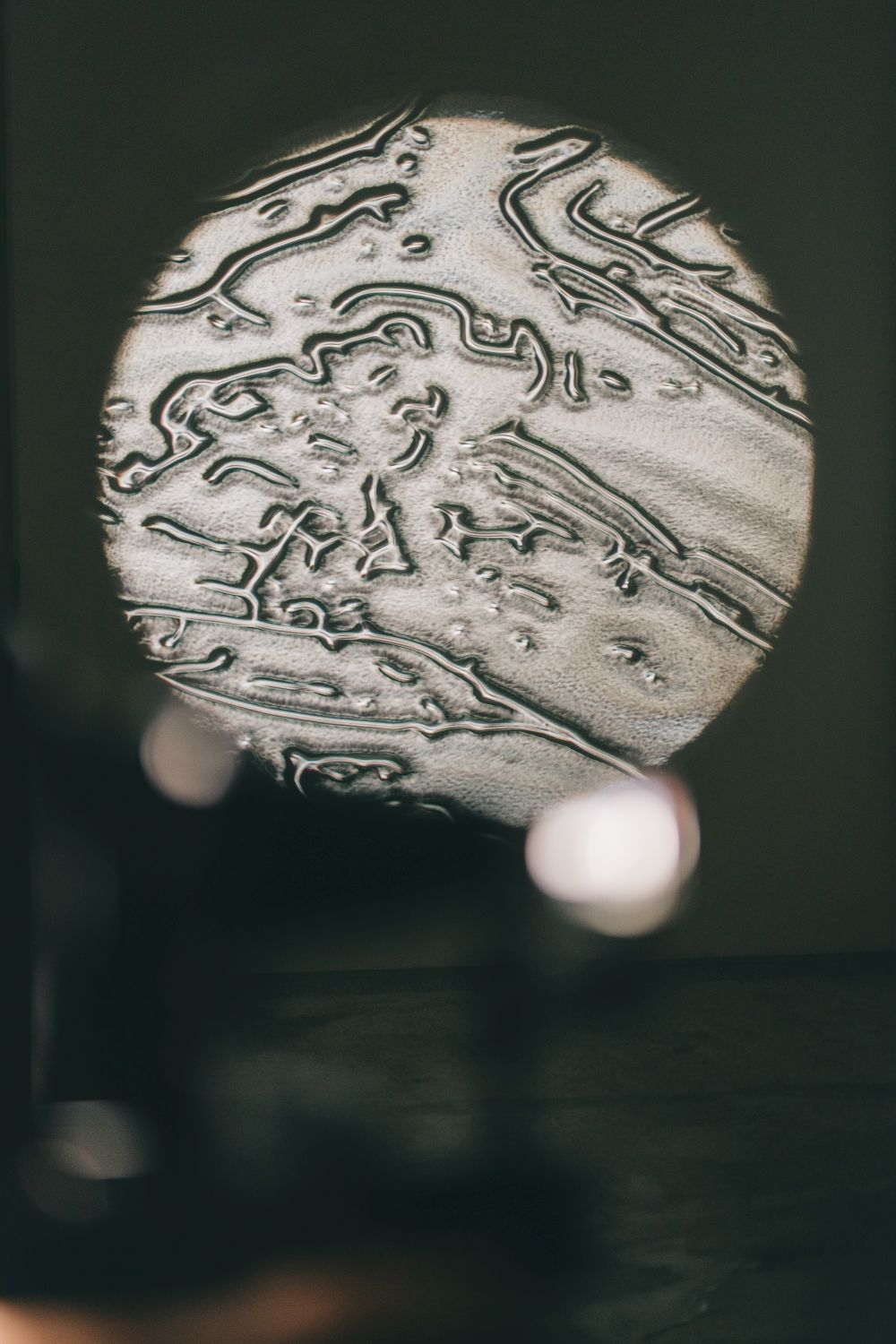
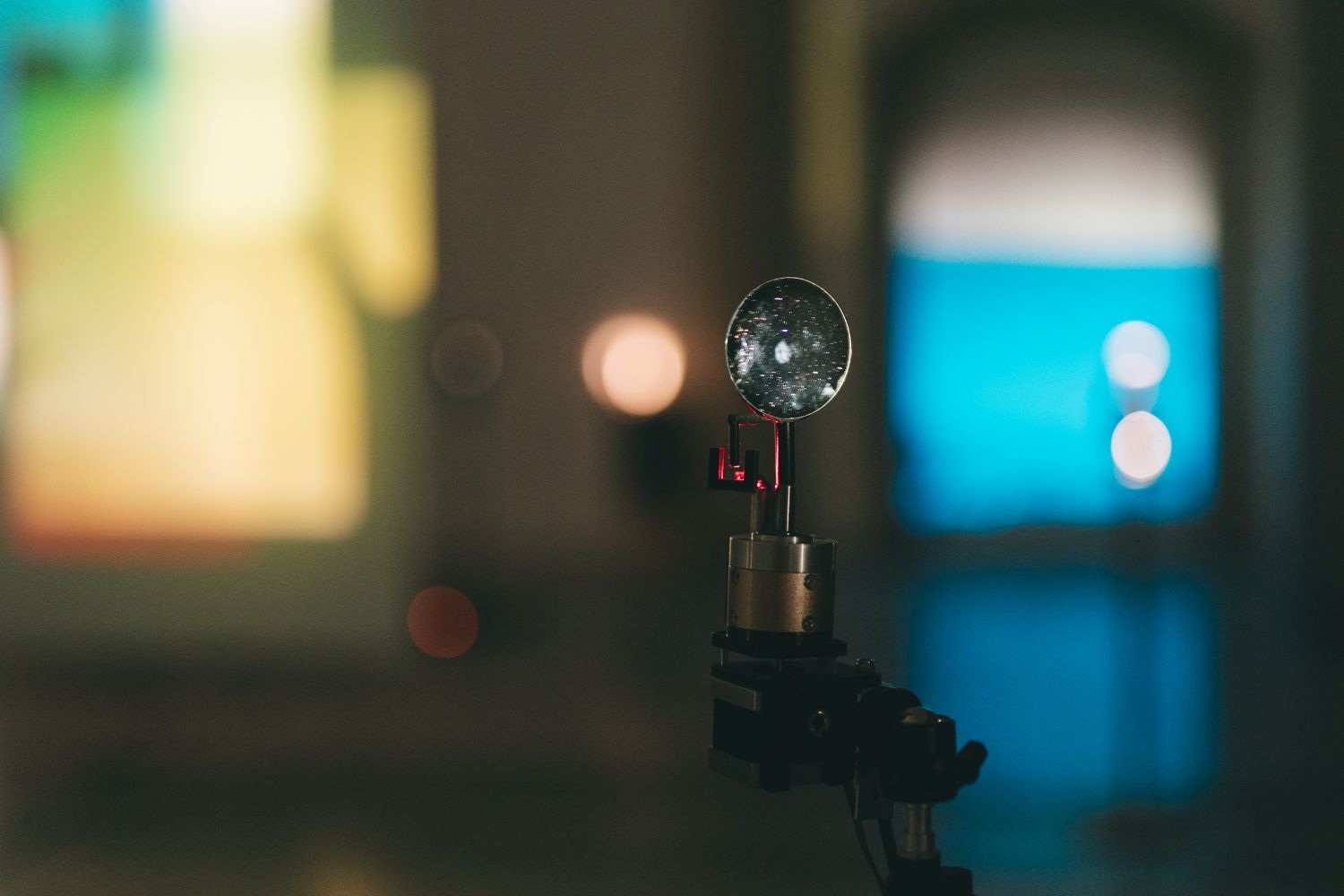
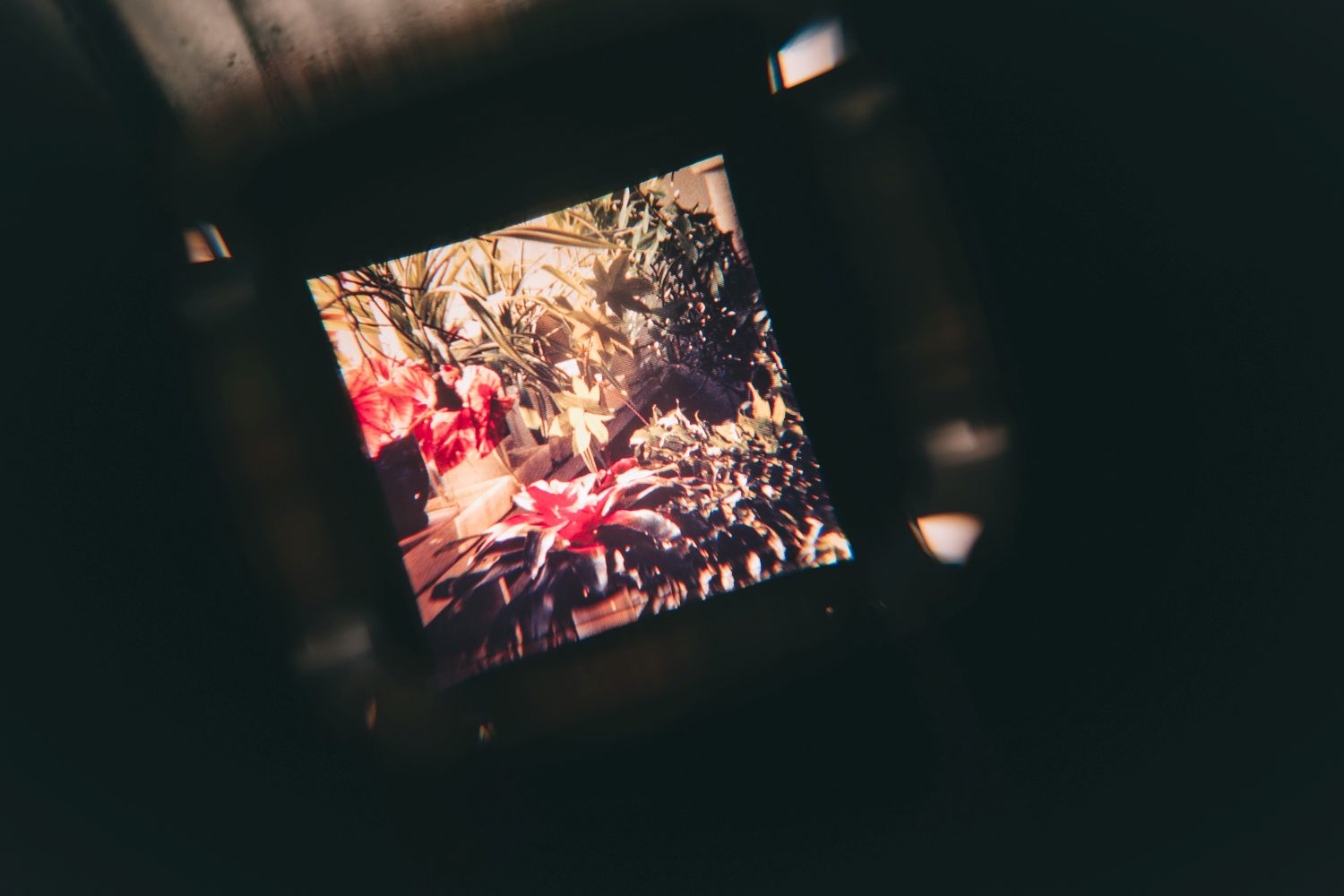
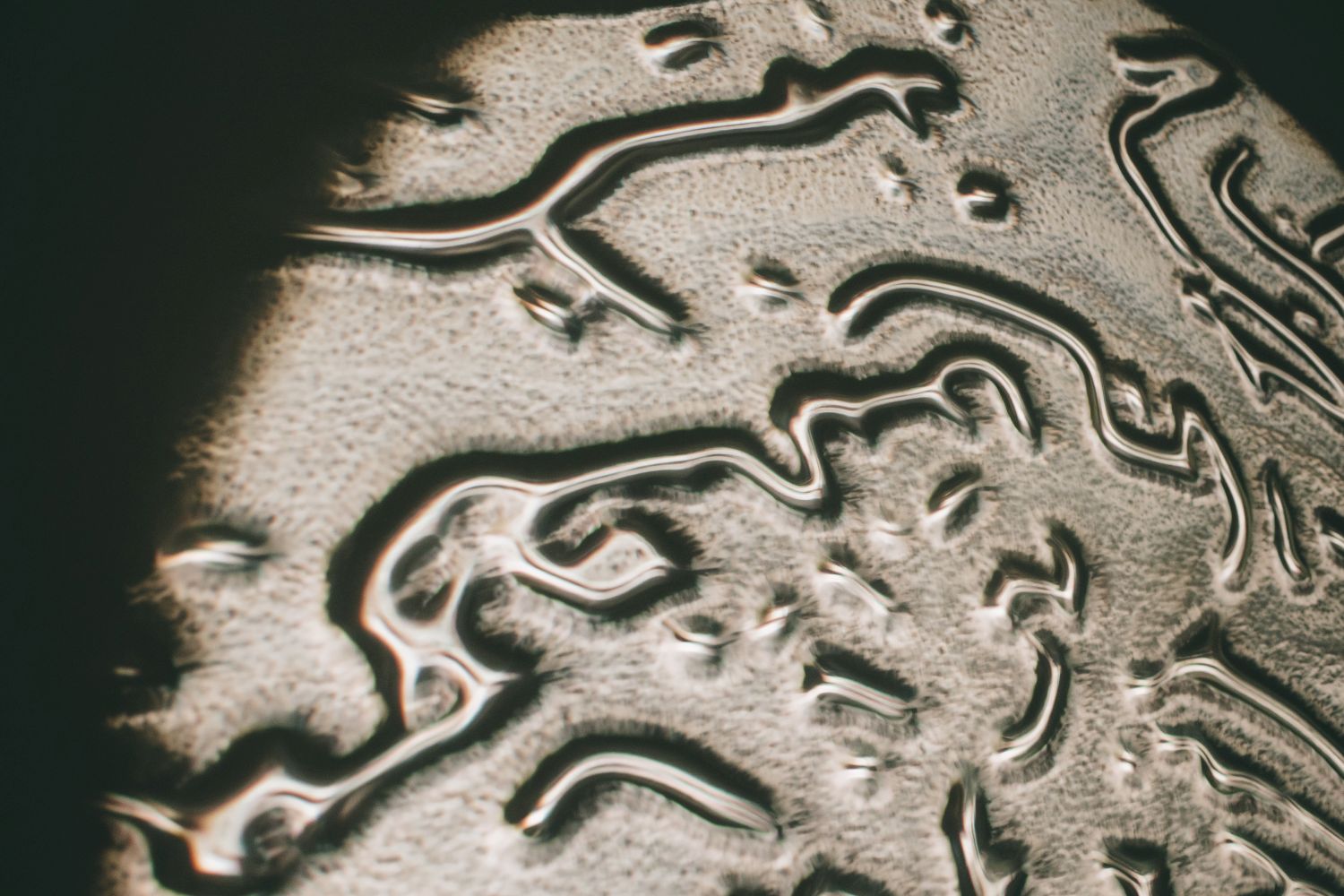
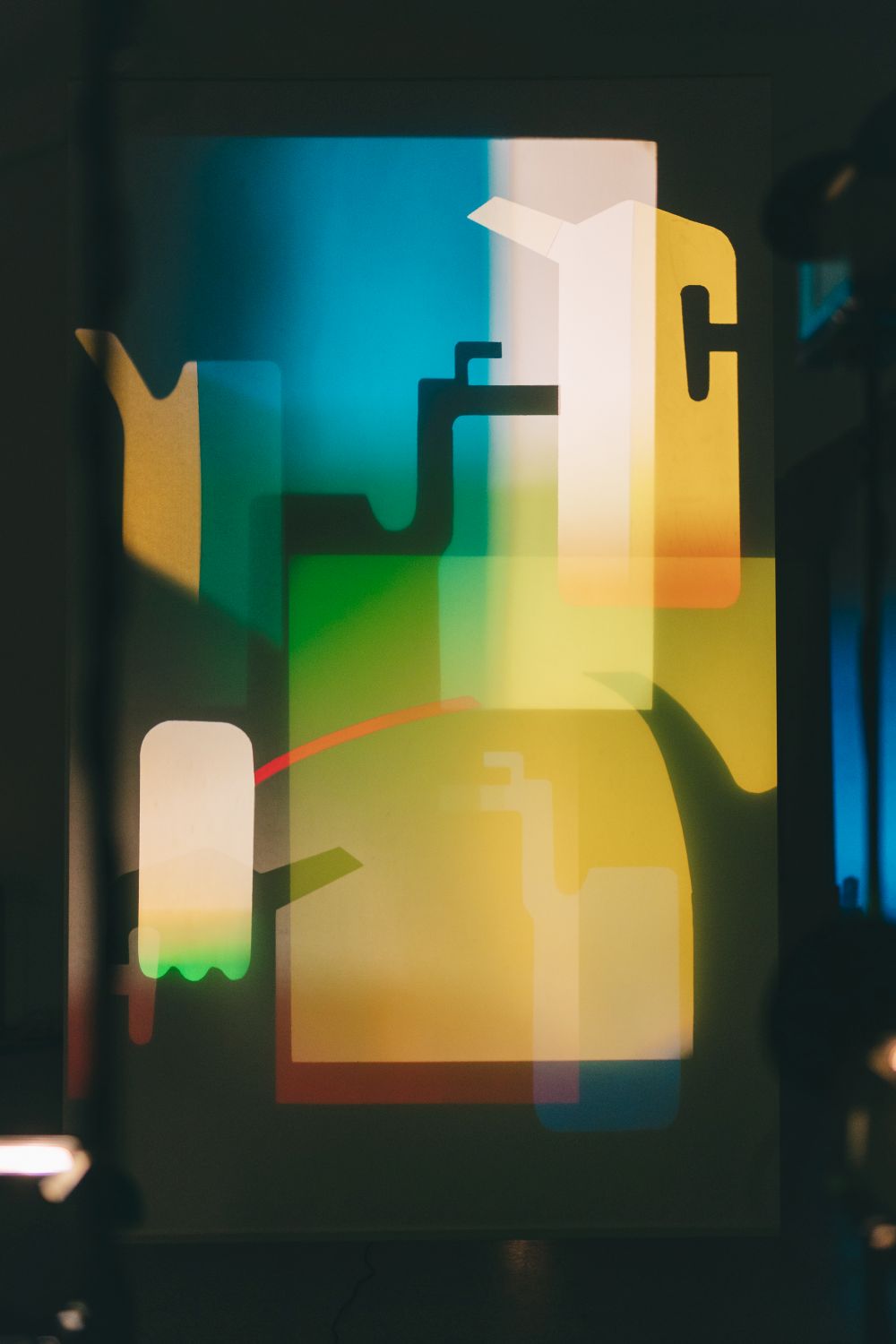
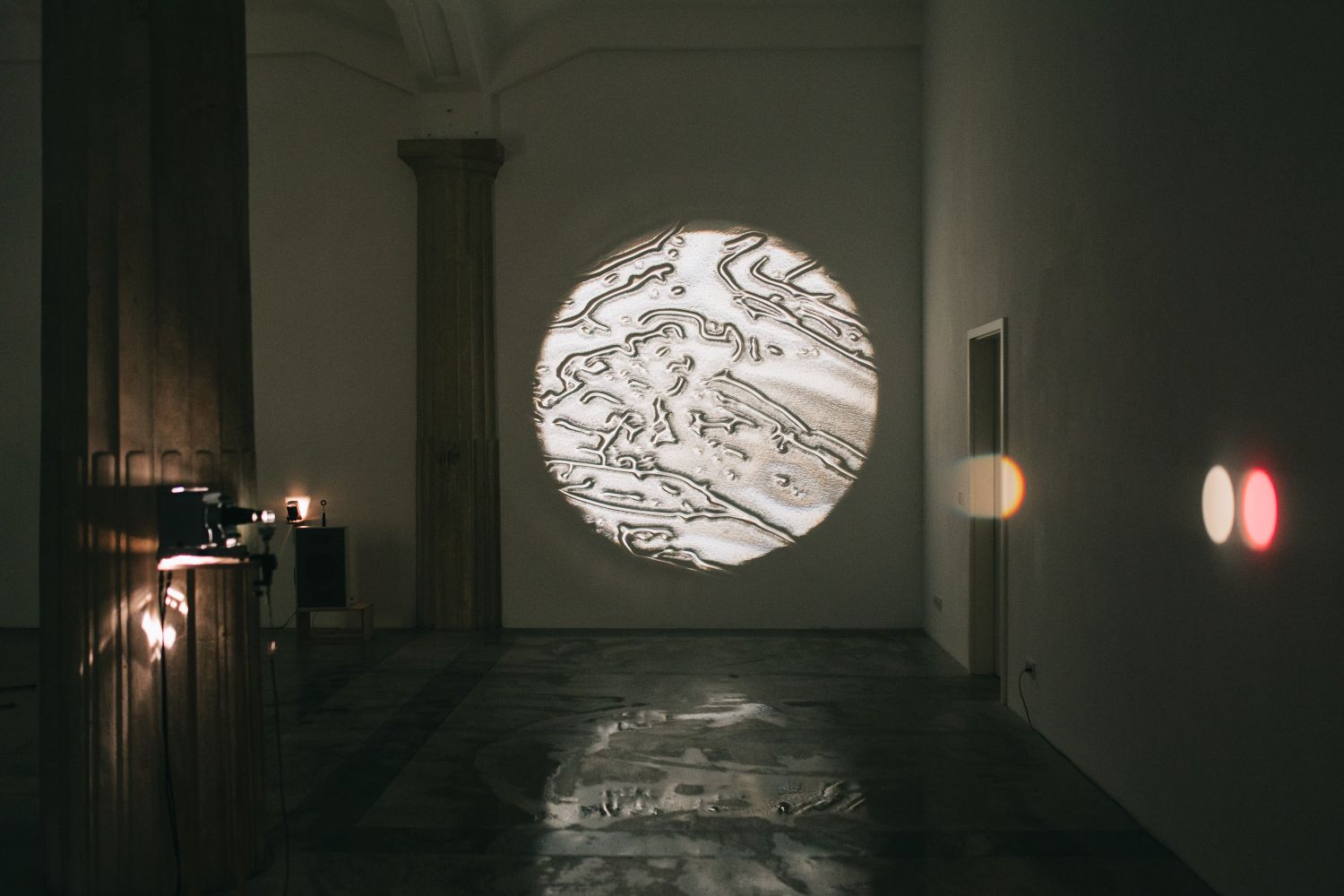
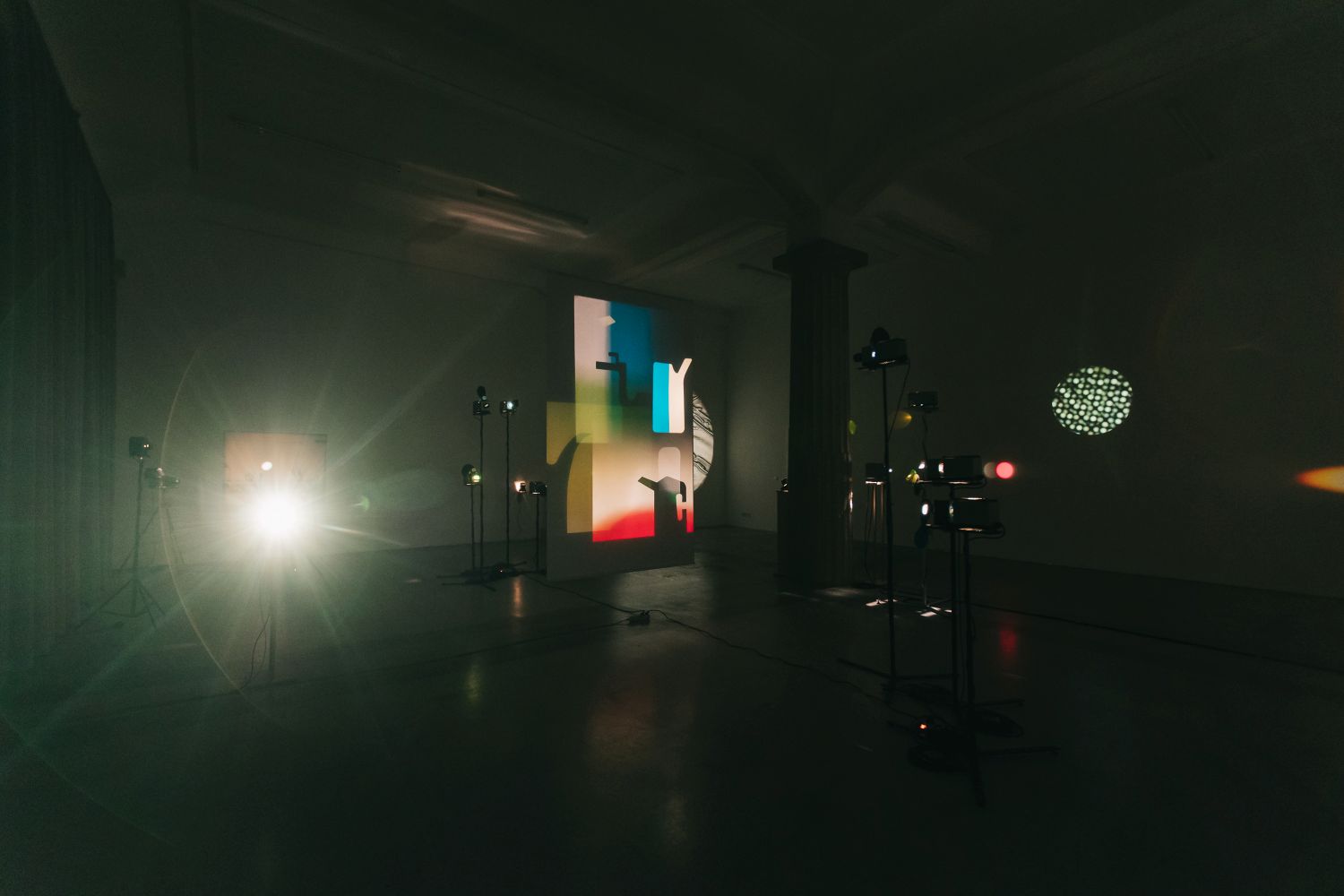
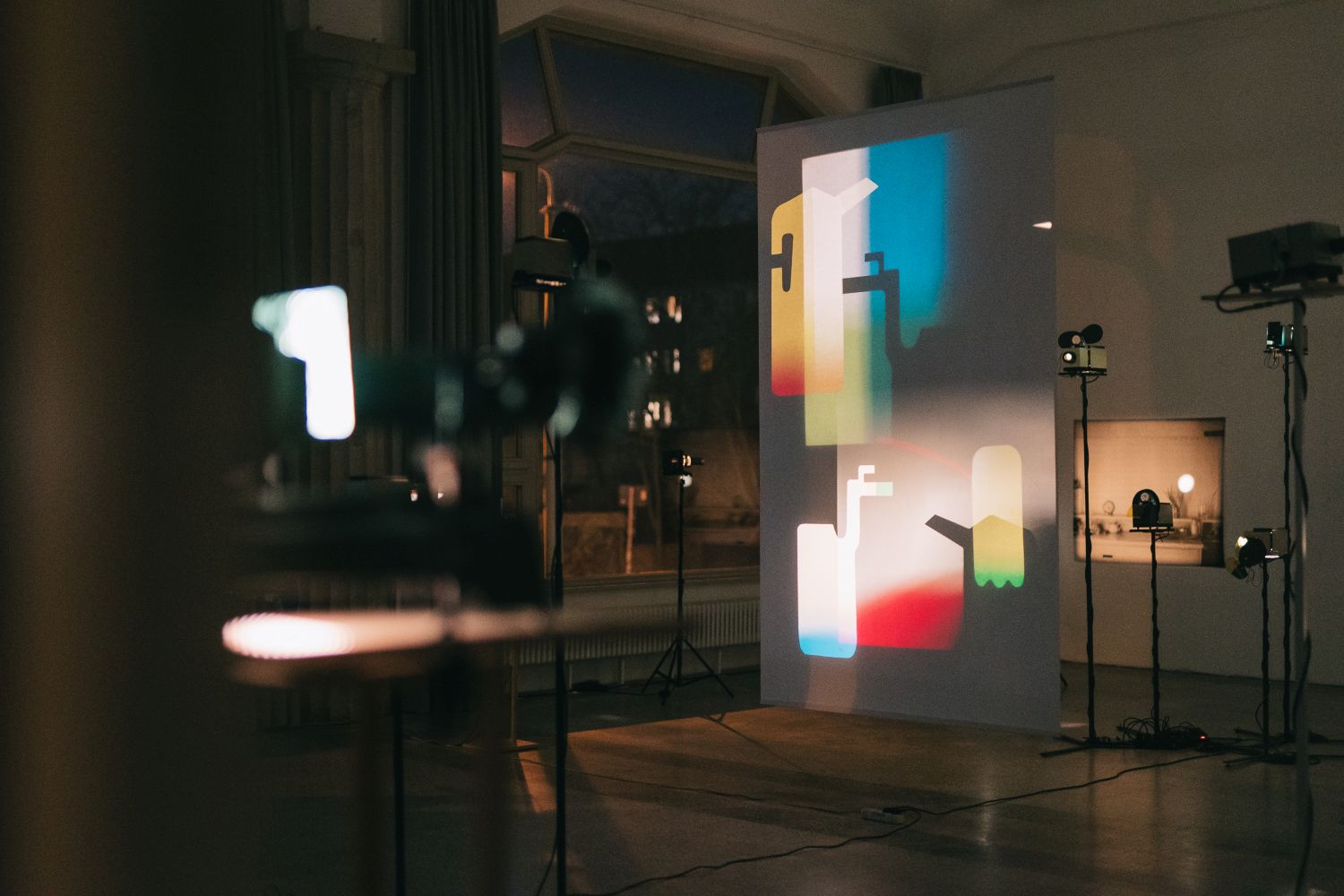
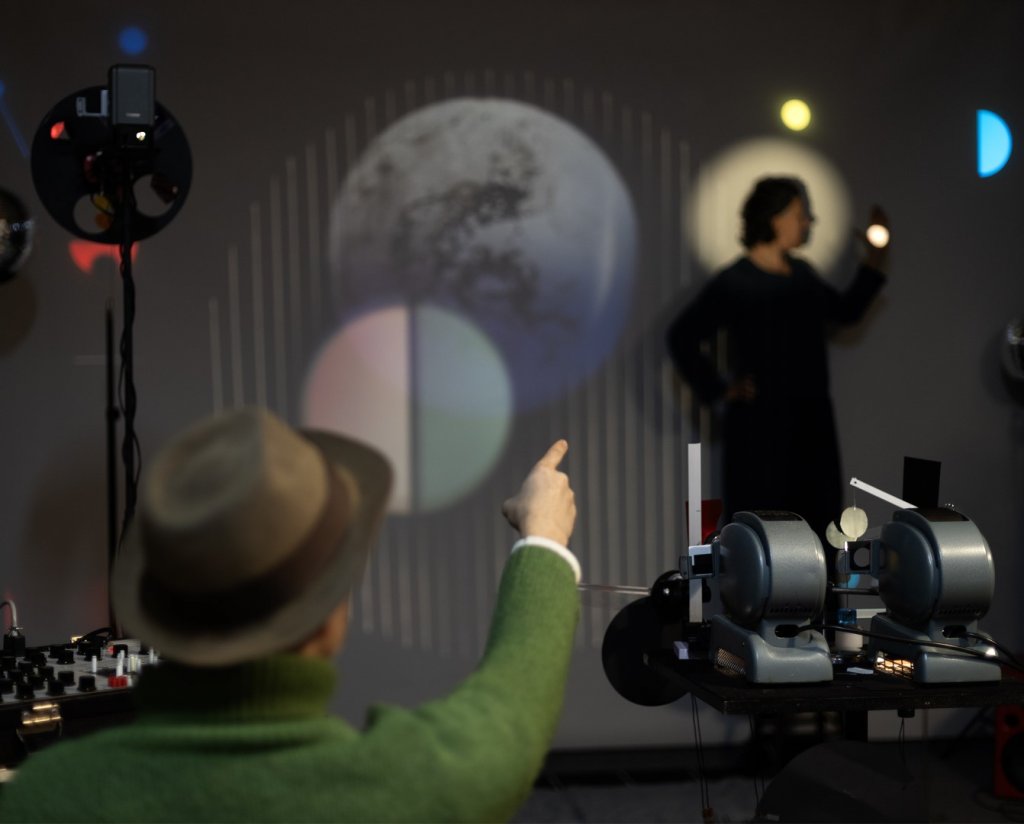
The exhibition expands a mode of thinking in which the cosmos and plant life function on a single scale of experience, through projection, light, sound, and practices of care and observation. Four elements recur in its structure: houseplants, planets, the Sun, and the blue sky. The first evokes the domestic dimension of Jurkiewicz’s work – his fascination with plant growth, his careful observation of it, and the homemade tools for plant care which he constructed from readily available, often discarded materials. The planets appear in forms reminiscent of digital renderings, recorded in glass and surfaces. The Sun is evoked through the reconstruction of a specific observational situation from Jurkiewicz’s apartment. Sky blue, a fundamental color in his work, becomes the hue that organizes the exhibition space.
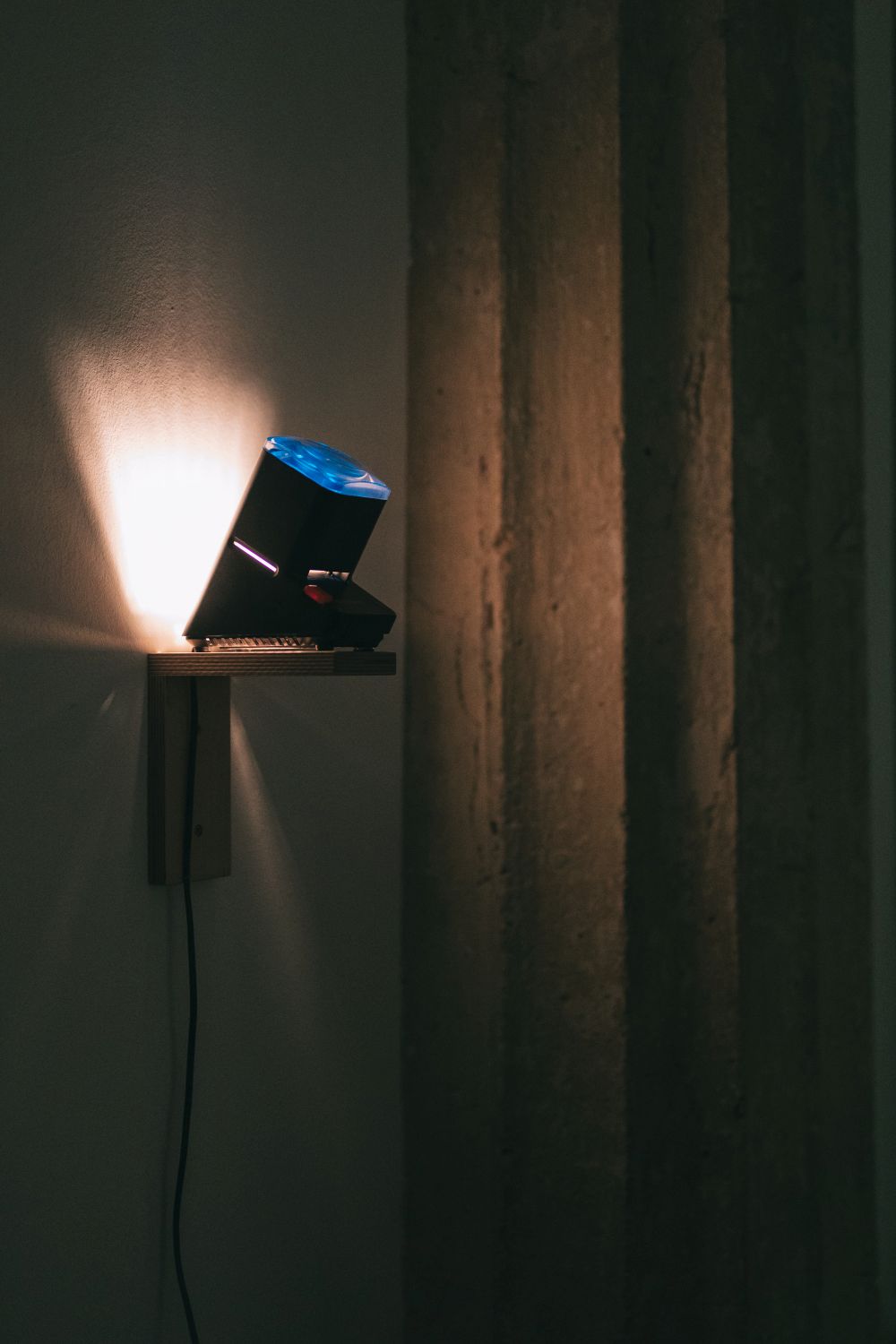
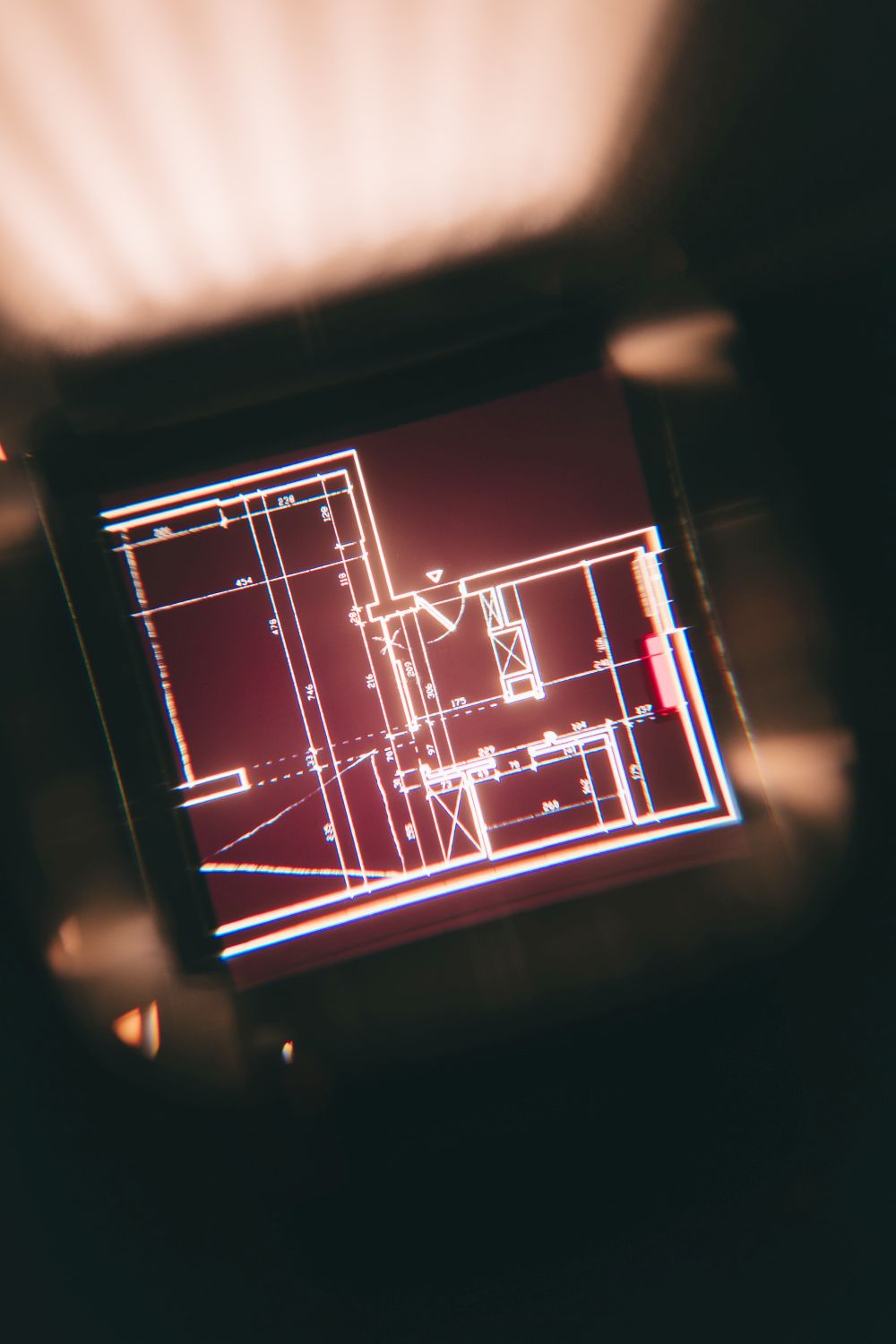
kinoMANUAL employs projection as a medium allowing them to forgo the production of new objects in favor of working with light, image, and sound. This approach aligns with that of Jurkiewicz, in which he consciously refrained from creating additional object-based works, resisting overproduction – today understood as one of the foundations of the ecological shift in art. Instead of large-format prints, the exhibition features projections – ephemeral, shifting images dependent on the conditions of the space. Sound is also an important element: a composition assembled from the music present during the time Jurkiewicz conducted his observations. It creates a kind of auditory projection of the apartment, a backdrop in which everyday life and the cosmos overlap. Fragments of Jurkiewicz’s works, views from his window, objects from his surroundings, and plants appear as single slides – images to be glimpsed – around which the setting of an intimate encounter is constructed.
The exhibition becomes a space where multiple orders intersect: the internal and external, the vast and the intimate, the scientific and the domestic. It raises questions about the limits of perception and how the distant can become close. It asks whether the cosmos – rather than an area of conquest and expansion – can be considered as part of our “home.” And a finally, how far the concept of living in a world can go in which the boundary of what is considered ours is constantly shifting.
27.02 — 08.03.2026
Location:
Villa Heike
Freienwalder Str. 17
13055 Berlin
Opening:
27.02.2026
7pm
Artist talk:
28.03.2026
4pm
moderation:
Anna Mituś
Polish Institute in Berlin
Opening hours:
01.03 — 3pm-7pm
02.03 — closed
03.03-08.03 — 3pm-7pm
Entry free
Organizers:
Galeria FOTO-GEN
Villa Heike
Curator:
Paweł Bąkowski
Media support:
Pismo Artystyczne Format, Contemporary Lynx, Kwartalnik Fotografia
Visual identification:
Zosia Jaros
Translations:
Christa Conklin, Fabryka Tłumaczeń
The project was co-financed from the budget of the Lower Silesian Voivodeship Government and from a grant from the Foundation for Polish-German Cooperation
kinoMANUAL is a small, independent audiovisual studio from Wrocław, founded by the artists Aga Jarząb and Maciek Bączyk. Since 2014, the duo has been creating films, photographs, objects, and installations together, continuing the avant-garde traditions of light art, kinetic art, animation, and experimental cinema. Their work emphasizes physical contact with materials and an exploration of the nature of the tools they use. The artists of kinoMANUAL collaborate with artistic collectives across Europe, creating visual identities, and producing exhibitions and performances in Poland and abroad. Their films have received awards at animation and experimental film festivals. Since 2017, kinoMANUAL has also performed with the band Pin Park, for whom they create visuals and music videos.
Aga Jarząb (1977) is a filmmaker, animator, and graphic designer. A graduate of the Academy of Fine Arts in Wrocław with a Master of Fine Arts degree, Jarząb went on to join the faculty as a lecturer and researcher. In 2017, Jarząb received a PhD in art and continues her academic work at the Faculty of Media Arts. She began her artistic journey as a graphic designer but ultimately found her artistic voice in animation. Her work focuses on traditional animation techniques such as drawing, cut-out animation, and direct animation. Her filmography consists primarily of abstract, experimental short films. Since 2014, she has co-created films and performances with Maciek Bączyk as part of kinoMANUAL, presenting at numerous animation festivals worldwide. As a graphic designer and animator, Aga Jarząb collaborates with numerous cultural institutions in Poland, including museums, art fairs, and film festivals. Two of her films from the Jarząb Sisters series were included in the Action – Animation DVD anthology released by the National Audiovisual Institute NInA.
Maciej Bączyk (1977) is a visual artist working with sound and image in practice and theory. He is a graduate of Cultural Studies from the University of Wrocław. In 2010, Bączyk returned to the visual arts, primarily experimental film and installation. A defining characteristic of his work is his hands-on contact with film, tapes, tools, and the production process itself. He has performed and recorded with bands such as AGD, Robotobibok, Małe Instrumenty, and the current bands Kristen and Pin Park. Bączyk is a guest curator of Think Tank Lab Triennial, part of the International Festival of Contemporary Drawing in Wrocław.
Zdzisław Jurkiewicz was born in 1931 in Wolsztyn, Jurkiewicz was an architect, painter, illustrator, photographer, theorist, and poet. He lived and worked in Wrocław at 59 Łaciarska Street. From 1950 to 1956, he studied at the Faculty of Architecture of the Wrocław University of Science and Technology, graduating in 1956. After graduating, he began his academic career at his alma mater, teaching at the Faculty of Architecture, Painting, and Sculpture. In 1966 Jurkiewicz was awarded the title of Professor of Fine Arts. From 1979, he also lectured at the State Higher School of Fine Arts in Poznań. He was a member of the Association of Polish Visual Artists (ZPAP) and the Wrocław Group. In 1970, he received the Cyprian Kamil Norwid Award for Art Criticism and in 1976 he was awarded a scholarship from the Kościuszko Foundation. From that year on, he also served as an expert for the Ministry of Culture and Art in the field of contemporary art evaluation. He published articles on contemporary art and, from 1978, also devoted himself to poetry. His works were presented at major international exhibitions, including the São Paulo Biennale (1974) and the Pompidou Centre in Paris (1983) where he represented Poland.
Jurkiewicz’s interest in art was instilled in him by his father, Ludwik. One of the artist’s many passions was astronomy. He built his first telescope at the age of thirteen, and his diploma project from the Faculty of Architecture of the Wrocław University of Science and Technology was the design of an observatory. Jurkiewicz sought to deepen his knowledge regarding the question of color. His paintings, formally close to matter painting, evolved first towards gestural painting, and then explored the concept of “shape continuity,” which became central to his work at the time. In the second half of the 1960s, Jurkiewicz returned to astronomy, constructing telescopes and observing and photographing stars. He transformed his apartment into a remarkable cabinet of curiosities — a studio and an observatory all in one. The artist’s studio apartment became the site of events, the only trace of which today is photographic documentation, including, Drawing in the Bathroom (1972), Drawing with Light (1978), and The Sun July 1, 1972 (1972). In the late 1970s, animals began to play a significant role in Jurkiewicz’s scientific and artistic endeavors, for ex. Japanese mice and hamsters, for which he built custom objects, and somewhat later, plants, also bred and observed by the artist in his apartment on Łaciarska Street. Jurkiewicz is considered the author of what is likely the first environmentally themed artwork in Poland.
Zdzisław Jurkiewicz died in 2012 in Będków, Poland.
foto & video: Jerzy Wypych